September 21, 2026
ICMEMOHRI Annual Meeting 2026 From Memory to Memorialization Report and Reflections Conference
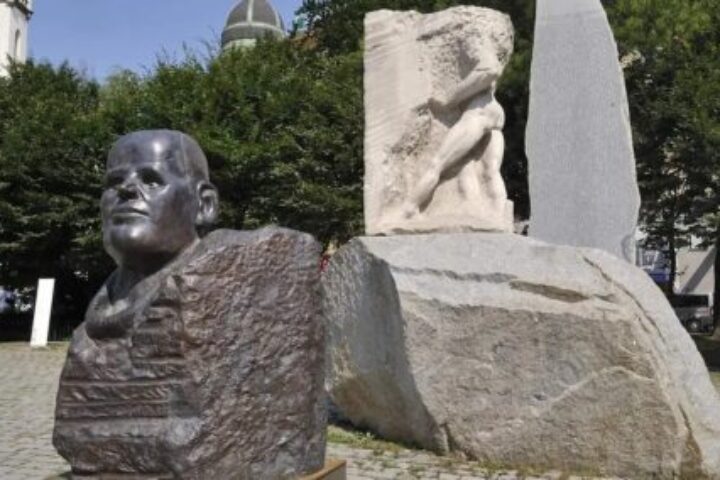
From 25 to 29 May 2026, ICMEMOHRI – the International Committee of Memorial and Human Rights Museums – held its Annual Meeting in Vienna. The conference, entitled From Memory to Memorialization, also marked the 25th anniversary of the committee founded in 2001 as the International Committee for Memorial Museums for the Remembrance of Victims of Public Crimes and subsequently developed into today’s ICMEMOHRI.
Forty-six participants from 20 countries gathered in Vienna, representing Europe, Africa, Asia, and North and South America. This geographical diversity was integral to the intellectual framework of the conference. The aim was not simply to place different historical experiences and cultures of remembrance alongside one another, but to bring them into meaningful dialogue.
The programme combined panels and discussions with visits to museums, archives, historical sites, and monuments. Vienna therefore served not merely as the venue but as a field of inquiry in its own right. The site visits were discussed in three debriefing groups and related to experiences from other countries and institutional settings. A Pre-Conference Day and a Post-Conference Day extended this approach, with the meeting concluding at Mauthausen and Gusen.
25 Years of ICMEMOHRI: Remembrance as a Mission and an Open Question
The anniversary offered an opportunity to reflect on the history of the committee. Its establishment around 2000 was linked to a profound transformation in the field of memorial museums. As temporal distance from Nazi persecution and other historical experiences of mass violence increased, communicative memory was progressively giving way to cultural memory. Memorial sites became increasingly musealised, and questions of collections, documentation, conservation, archaeology, exhibition practice, and education gained new importance.
From the outset, however, memorial museums were conceived as more than a particular category of historical museum. Their remit included not only preservation and interpretation, but also remembrance and a specific responsibility towards victims, survivors, and their families. Establishing the committee within ICOM was intended to foster professional exchange while also creating an international voice able to speak publicly when remembrance, historical truth, and the dignity of victims are under threat.
Twenty-five years later, that question must be reconsidered under significantly changed conditions. The development of ICMEMO into ICMEMOHRI has explicitly brought Human Rights Museums into the committee’s remit. One of the central questions underlying the Vienna meeting was therefore: What is ICMEMOHRI’s distinctive role today, and on which issues should the committee be prepared to take a public position?
The panels, site visits, and discussions did not yield a single answer. Rather, they showed how closely questions of human rights are embedded in the concrete practices of remembering, collecting, researching, exhibiting, and interpreting.
From Memory to Memorialization: Remembrance as an Ongoing Process
One of the strongest threads linking otherwise very different contributions was the recognition that memorialization is never complete. Memory is not transformed once and for all into a monument, an exhibition, or a memorial site. It must be preserved, interpreted, contextualised, transmitted, and repeatedly renegotiated in the public sphere.
Vienna’s memorial landscape made this especially clear. The DÖW and Morzinplatz, Judenplatz, the Hrdlicka Memorial, Heldenplatz and Heldentor, the House of Austrian History, Wien Museum, the Jewish Museum, Human Rights Square, and the Marcus Omofuma Memorial do not simply refer to different historical events. They also reflect different moments, political contexts, and social conditions of remembrance.
The debriefings repeatedly returned to the importance of understanding the history of memorials themselves. Who initiated a monument? When was it created? What opposition did it encounter? What verbal and visual language was chosen? What was made visible at the time, and what remained absent?
Vienna thus emerged as a city of layered memorialization. Shifts in Austrian remembrance of National Socialism and the Holocaust became visible alongside persistent absences and unresolved gaps. Existing monuments tell us something about a society, but so do monuments that were never built.
The title From Memory to Memorialization therefore acquired an additional meaning: memorialization is not the final stage of memory. It is itself a historical process that must be studied, contextualised, and questioned.
Who Is Remembered, Who Speaks, and Who Remains Invisible?
Closely connected to this was another question that recurred across both panels and site visits: who is remembered, who is given a voice, and who remains invisible?
This became especially evident in discussions of the persecution and murder of Sinti and Roma. Contributions on the representation of Roma in post-socialist memorial museums, on antigypsyism-critical education, and on Uštica as a site of remembrance of the Samudaripen demonstrated that a victim group may be formally present in an exhibition while still remaining structurally marginal.
The key question is therefore not simply whether Roma appear, but how they appear. Which objects are shown? Which photographs? Who produced those images? Are Roma represented as historical subjects with names, biographies, families, and voices of their own, or primarily through the gaze of perpetrators and outsiders?
Uštica pointed to another possibility: Roma can themselves become agents of memorialization, helping to shape how their history is remembered and communicated.
In Vienna, this discussion acquired a direct local dimension. The absence to this day of a central memorial to the victims of the Samudaripen was explicitly noted and discussed by the international participants. The absence of a memorial therefore emerged as an act of memory politics in its own right.
The broader implication extends far beyond this particular case. Expanding a culture of remembrance cannot simply mean adding further victim groups to an existing narrative. Their perspectives must be structurally integrated into research, collecting, exhibition practice, and interpretation, while the historical conditions that produced their previous invisibility must themselves become visible.
Museums Do Not Simply Present History – They Shape Historical Perception
The question of visibility led directly to questions of museological responsibility.
The use of historical photographs was discussed particularly intensively. Many images of persecution, deportation, and violence were produced by perpetrators, or within structures of power that were themselves part of the violence being documented. When such photographs are used merely as illustrations, museums risk reproducing the original gaze.
The answer, however, is not necessarily to exclude problematic images. Their conditions of production can instead become part of the interpretation. Who took the photograph? For what purpose? Who was looking, and who was being looked at? Which perspective is absent? Can names, biographies, testimonies, or other images of those depicted be recovered?
The absence of counter-sources can itself be made meaningful. A gap is then no longer merely an archival deficiency, but part of a history of power, persecution, and uneven transmission.
Related questions arose during the visit to the Department of Anthropology at the Natural History Museum. The direct encounter with original documentation concerning anthropological “racial research” made the role of scientific institutions in constructing and legitimising racist categories particularly tangible.
This raised broader questions about the responsibilities of present-day institutions towards problematic collections, especially human remains. Institutional responsibility does not begin only where a present institution itself committed historical injustice. It also follows from the current possession and stewardship of materials acquired under coercive, colonial, racist, or otherwise problematic conditions. Provenance research, transparency, collaboration with affected communities, and, where appropriate, restitution and repatriation therefore become central elements of institutional responsibility.
Museums do not simply preserve historical evidence. Through selection, classification, description, display, and interpretation, they shape how history is perceived. Museum interpretation is therefore never neutral.
The Historical Site as Evidence
The site visits in Vienna, and later those to Mauthausen and Gusen, also drew attention to the significance of place itself.
What happens when few material traces remain at a site of persecution? How does later construction change its meaning? How much can an exhibition explain, and what can only be understood through direct encounter with the site?
At Vienna’s Morzinplatz, this question arose in relation to the vanished Gestapo headquarters. At the House of Austrian History, it became inseparable from the historical and symbolic significance of Heldenplatz and the Hofburg. Mauthausen and Gusen, by contrast, showed particularly forcefully how differently sites belonging to the same system of Nazi persecution could be preserved, altered, built over, protected, and memorialised after 1945.
The comparison between Mauthausen and Gusen demonstrated that the present condition of a historical site is never a natural consequence of its past. It is the result of subsequent political decisions, ownership structures, civic initiatives, conflicts, and decades of memory work.
The historical site is therefore not merely a backdrop to interpretation. Its surviving traces, transformations, absences, and losses are themselves historical evidence.
Remembrance Requires Care – and People
Several contributions shifted attention away from monuments and institutions towards the people who sustain memory.
Particularly important was the idea of memory work as long-term care maintenance. A monument or memorial site is not “finished” when it opens. Sites must be maintained, archives sustained, knowledge transmitted, relationships with communities cultivated, and public attention continually renewed.
In a very different institutional setting, Casa do Povo in São Paulo illustrated how far this idea can extend. There, preservation and activation are inseparable: memory is not simply archived but used, debated, performed, sung, and repeatedly reappropriated in everyday life.
Work on barely visible mass graves likewise underscored the importance of human memory. Testimonies from local residents and knowledge transmitted within families may be essential simply to locate a site. Technical methods can then be used to verify and refine that knowledge. Human memory and scientific technology are not competing forms of evidence here; they are interdependent.
A broader insight emerged from these examples: memorialization is not sustained by institutions, buildings, collections, and data alone. It depends on people who preserve knowledge, ask questions, assume responsibility, and carry memory forward.
Relating Different Histories of Memory
The international composition of the meeting brought together very different histories of violence and remembrance: the Holocaust and the Samudaripen, Nazi and Stalinist persecution, apartheid and colonialism, dictatorships, political violence and enforced disappearance, genocide and civil war.
This inevitably raised questions of comparison and competition.
The discussions made clear that memories can indeed compete: for public attention, political recognition, resources, or the status of a society’s central victim narrative. This is precisely where the concept of multidirectional memory becomes especially useful.
Different historical experiences can illuminate one another, generate new questions, and open new perspectives. But comparison does not mean equivalence. The Holocaust, the Samudaripen, apartheid, colonialism, and different forms of state violence each have specific historical causes, actors, structures, and consequences.
The challenge, then, is neither to isolate histories of memory from one another nor to dissolve their differences into a generic narrative of human suffering.
For ICMEMOHRI, this points to an important field of work: creating meaningful connections between different memory cultures without flattening their differences. Avoiding competition does not require sameness.
There Is No Universal Model of Memory Culture
The international perspective also made clear that institutional models cannot simply be transferred from one context to another.
Memorial museums in South Africa, Bangladesh, Colombia, Brazil, Ukraine, and other regions operate under historical, political, and economic conditions very different from those of many established European museums and memorial sites. Postcolonial histories, liberation struggles, and enduring social inequalities shape their work, as do limited resources, political instability, and weaker institutional infrastructures.
In such contexts, oral history, community engagement, and grassroots initiatives may play a much larger role. Memory is not necessarily first produced within a state institution and then communicated to society. It may instead emerge within communities and only later take institutional form.
This also means that an international committee should not simply export presumed “best practices” from one part of the world to another. The value of international exchange lies precisely in taking different experiences seriously and recognising that established institutions can learn from participatory, community-based, and less resource-intensive approaches to remembrance.
The international composition of the Vienna meeting was therefore not merely an organisational achievement. It was methodologically central to the conference itself.
Memorial Museums and Human Rights Museums
From these discussions, a more substantive understanding began to emerge of what the development from ICMEMO to ICMEMOHRI can mean.
Human rights need not be treated as an additional topic alongside the Holocaust, genocide, political persecution, or memory culture. They can instead function as a cross-cutting perspective through which the entire work of memorial museums is reconsidered.
Human rights questions arise in the treatment of victims and survivors, in the representation of marginalised groups, in relation to human remains and problematic collections, in questions of participation and accessibility, in responsibilities towards communities, and wherever historical mechanisms of exclusion continue to shape the present.
Contributions from the so-called “Global South” described memorial museums in this sense as potential civic spaces: institutions that preserve and research difficult histories while also creating spaces for dialogue, public participation, and ethical reflection.
The Viennese sites broadened this perspective further. Human Rights Square and the Marcus Omofuma Memorial linked historical persecution directly to contemporary questions of racism, state violence, and human dignity. In such contexts, historical remembrance and human rights cannot be neatly separated.
This helped clarify why bringing the two fields together is so important for ICMEMOHRI: remembrance is not only about preserving the past. The ways in which societies remember also shape the societies they inhabit in the present.
Remembrance under Political Pressure
This social dimension acquired particular urgency throughout the conference.
Several contributions addressed political interference in memory culture, attacks on memorial sites, historical revisionism, polarisation, and attempts to subordinate historical narratives to national or party-political agendas.
Museums and memorial sites operate within a difficult field of tension. They are social institutions and cannot exist outside political conflict. At the same time, their credibility depends on resisting attempts to reshape historical evidence according to contemporary political needs.
Historical accuracy therefore does not mean avoiding conflict. Disagreement, rupture, and changing interpretations can and should be made visible. What matters is maintaining a clear distinction between historical evidence, interpretation, memory, and political instrumentalisation.
The conference thus returned to a question already present at the committee’s founding: When is professional exchange no longer enough? When does an international network need to speak with a collective voice?
From an Anniversary Conference to a Future Agenda
The Vienna Annual Meeting was therefore more than a retrospective celebration of 25 years of ICMEMOHRI. The history of the committee became a point of departure for thinking about its next phase.
The panels, site visits, debriefings, and conversations suggest several interconnected priorities.
ICMEMOHRI can provide a space in which different histories of memory enter into dialogue without being forced into competition or equivalence. It can help ensure that marginalised perspectives are not merely added to existing narratives but structurally embedded in museum practice. It can strengthen international exchange on the ethics of collecting, exhibiting, interpretation, and work at difficult historical sites. And it can take seriously the very different conditions under which memory work takes place across regions of the world, rather than presupposing a single institutional model.
Above all, the meeting demonstrated that bringing Memorial Museums and Human Rights Museums together need not amount simply to combining two categories of museum. It creates the possibility of understanding human rights as a perspective on memory work itself.
That possibility also entails responsibility. Wherever historical evidence is distorted, victim groups are played off against one another, people are excluded from remembrance, or museums and memorial sites come under political pressure, an international committee must consider what its public role should be.
The Vienna conference could not, and should not, offer a final answer. But it succeeded in sharpening the questions.
Perhaps that is its most important outcome: preserving memory does not mean fixing it in place. It means returning to it again and again through narration, contextualisation, and critical inquiry – while taking responsibility for what is remembered, how it is remembered, who is able to speak, and what significance the past is allowed to have in the present.
This report could not have been produced in its present form without the invaluable work of Pernille Bollander, who was responsible for taking the minutes during our Annual Meeting. Her considerable effort in reviewing, consolidating, and carefully editing her notes and recordings provided an essential basis for reconstructing the discussions, reflections, and many different perspectives that shaped our meeting.
Equally, the report would not have been possible without the individual contributions of all our participants, whose presentations, comments, discussions, and reflections gave the meeting its substance and vitality. My sincere thanks go to to everyone who contributed so generously to our exchange.
Felicitas Heimann-Jelinek
Chair ICMEMOHRI